


Free written scope consultation - allowances, timeline, and change-order rules on paper before a single trade is scheduled
Sakrete Kitchen Remodeling: The San Diego Owner’s Guide
If you’re mid-renovation with Sakrete products in your San Diego kitchen and something’s gone sideways, here’s the straight answer: we install and build around Sakrete bagged concrete, mortar, and leveling products every week, and a kitchen remodel in San Diego with Sakrete materials in the mix typically runs $16,520 to $53,100 depending on scope, layout, and finish level. Most Sakrete-related failures show up as cracked tile, hollow-sounding floors, or subfloor that’s moved after a pour. You’ll notice it first as a grout line that splits or a corner that’s dipped half an inch since spring.
We’re an independent San Diego remodeling company, not affiliated with Sakrete. We just use their products where they make sense because we’ve seen what holds up and what doesn’t in coastal air.
Key Takeaways
- Sakrete-compatible kitchen remodeling in San Diego runs $16,520 – $53,100 installed, with small kitchens starting around $10,620.
- Failed Sakrete applications usually mean one thing: the substrate (the layer beneath the tile or flooring) wasn’t prepped or cured right, not that the Sakrete product itself was bad.
- We stock Sakrete floor patch, self-leveling underlayment, sand mix, and mortar on the truck for repair calls, so the fix doesn’t wait on a trip to a supply yard.
- Every repair gets a written price first and the 365-Day Done Right Promise in writing, so if it fails inside the guarantee period we come back and fix it at no charge.
Which Sakrete Models This Applies To

We work with the full Sakrete bagged concrete and mortar line on kitchen remodels in San Diego, but the products that matter most in a kitchen context are self-leveling underlayment, floor patch, sand mix (typically used as deck mud under tile), and their polymer-modified thinset mortars. If you have a bag of Sakrete in the garage and you’re not sure what it is, look at the bottom of the bag, not the front: Sakrete prints a product code and the ASTM specification it meets. A bag that says ASTM C-387 is a structural concrete mix. One that says ASTM C-926 is a mortar for stucco or masonry. One that says ASTM F-710 is a self-leveling underlayment. That spec is what tells you what it was made for, and it’s the first thing we check before we open a single wall.
For kitchen floors specifically, we see two common scenarios. The first is a self-leveling pour done by a previous contractor who skipped the primer step. In San Diego’s coastal microclimates, where concrete floors breathe moisture differently from neighborhood to neighborhood, an unprimed self-leveler lets the slab pull moisture out too fast and the pour won’t bond. The second is a sand mix bed under tile that was mixed too dry and crumbled under point loads, like a fridge or a heavy island. Both are repairable. Neither is a Sakrete product defect. It’s almost always a prep or mixing error.
On the OEM versus aftermarket question: Sakrete’s own products are what we’d call the OEM for the pours themselves, but the parts that fail around a Sakrete application (grout, uncoupling membrane, subfloor screws, edging profiles) don’t come from Sakrete. For those we use brands we can stand behind: KraftMaid and Wellborn for cabinets, Cambria and Silestone for countertops, Kohler and Moen for fixtures. The Sakrete material and the parts around it need to play nice, and that’s something we verify on every job, not something we assume.
Styles & brands we work with







Signs Your Sakrete Kitchen Remodeling Is Failing
- Hollow-sounding tile when you tap it with a screwdriver handle. That’s the mortar bed losing bond underneath. It means the Sakrete-compatible mortar never fully keyed into the substrate, or moisture is working through from below. Left alone, those tiles crack.
- Grout lines splitting in a straight line across the floor. A long, straight crack usually means the subfloor is flexing under traffic. In San Diego homes built before the 1990s, that often points to joist spacing that doesn’t meet modern deflection limits for tile.
- A floor that feels springy or bouncy near the island. Self-leveler that wasn’t mixed at the right water ratio loses compressive strength. The floor won’t show it visually at first, but you’ll feel it when you walk across it with a full pot.
- Cracks radiating from floor vents or plumbing penetrations. These are stress risers, and they’ll telegraph through any mortar bed if the pour wasn’t reinforced or the underlayment wasn’t scored around the opening. We see this a lot in older San Diego kitchens where the HVAC was retrofit after the slab was poured.
- A dip near the dishwasher or sink base cabinet. Water finds the low spot, and a low spot means the self-leveling pour wasn’t feathered correctly. Once a leak starts there, the substrate soaks it up and the mortar degrades from the bottom up.
See the difference
 Before
 After
After Before
 After
After Before
 After
AfterReplacement Cost & What’s Included
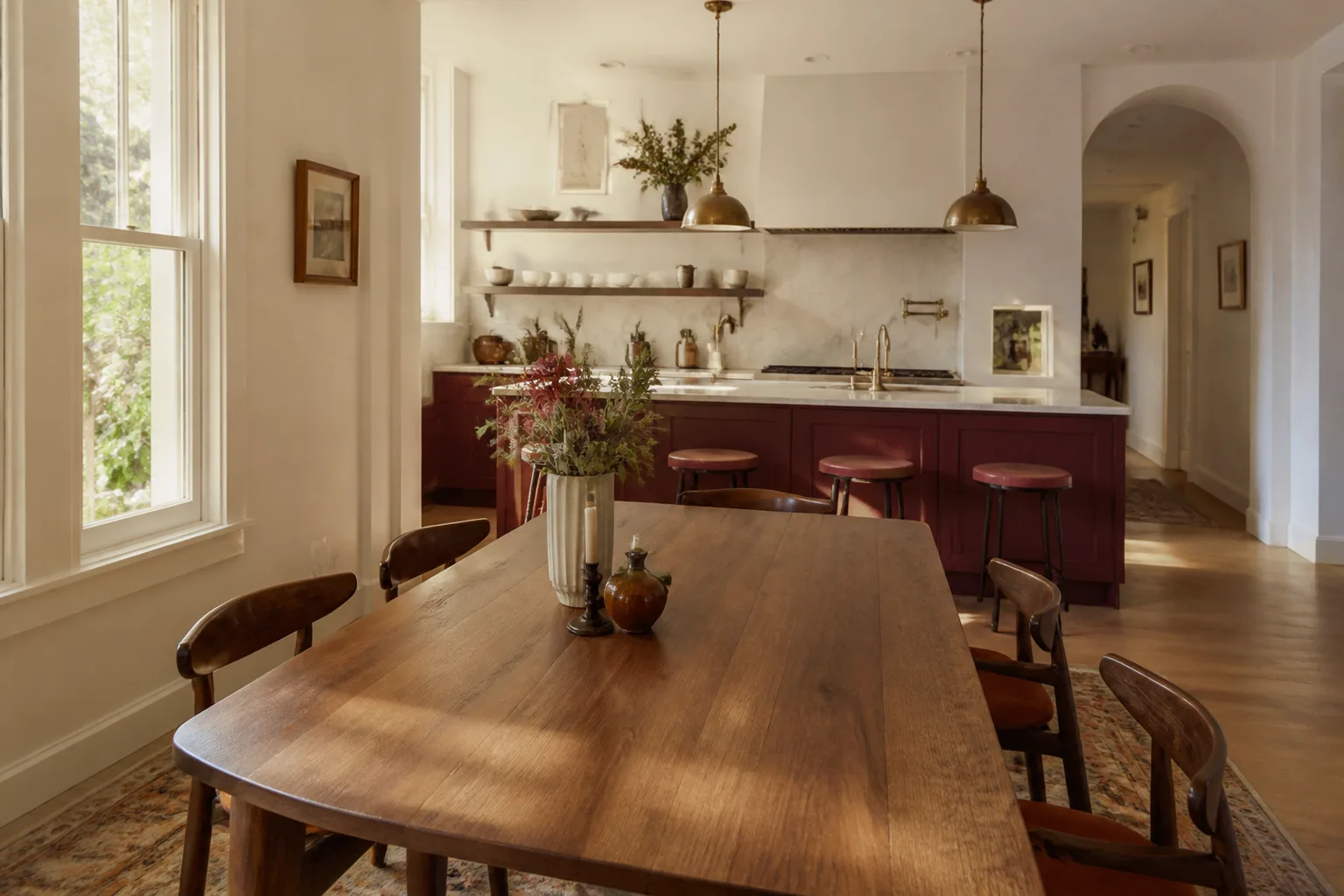
Repairing a failed Sakrete kitchen floor application in San Diego runs $945 to $2,950 for a backsplash-level fix, up to $16,520 to $53,100 for a full kitchen remodel that addresses the substrate, the flooring, and everything above it. A floor patch and retile in a standard San Diego galley kitchen typically lands in the $10,620 to $23,600 range. What drives the number: whether the subfloor needs reinforcement, how much of the old mortar bed has to come out, and the square footage of tile that has to be reset.
Every price we give is a written number, not a ballpark. That includes the parts, the labor, the disposal, and the finish work. No change orders after demo day unless you ask for something new. The work comes with our 365-Day Done Right Promise: if it fails inside the guarantee period, we come back and fix it at no charge. That’s in writing on every project, and if the repair fails after we leave, the second visit is free, no service call fee. We also pull permits and close them out properly, which matters in San Diego County where unpermitted kitchen work creates resale problems later.
DIY or Call Us?
Here’s where we’re honest about the split. You can safely check whether your Sakrete floor is failing by tapping the tile, checking grout lines, and looking for low spots with a long level. That costs you nothing and tells you what you’re dealing with. What we don’t recommend is trying to remove and re-pour a mortar bed or self-leveling underlayment yourself, because the dust is silica-laden (that’s a lung hazard, not a mess problem), the mixing ratios are unforgiving, and the bond failure that caused the first crack will repeat if the substrate isn’t prepped correctly. That’s a job for a pro with a HEPA extractor and a moisture meter.
Tell me what you need, I’ll tell you what it costs, and we’ll go from there. Call (619) 604-9624 and we’ll come look at the floor before anyone touches a bag of Sakrete.
FAQs
A properly prepped Sakrete self-leveling pour or mortar bed under kitchen tile should last 15 to 25 years in San Diego’s climate, until the tile itself wears or the subfloor moves. If yours failed in under five years, something went wrong in the installation, not the product. Call (619) 604-9624 and we’ll diagnose it for free.
Yes, if the bond failure is localized, spot repair with a compatible patching mortar is often enough, and it runs less than half the cost of a full repour. If the failure is widespread or the subfloor is flexing, patching it will just crack again. We’ll tell you which situation you have before we quote anything.
A localized mortar bed or underlayment repair in a San Diego kitchen takes one to two days, most of which is cure time. A full substrate rebuild with retile can run one to two weeks depending on scope. We give you a defined arrival window and a written schedule before work starts, and the phone number (619) 604-9624 gets a real person anytime.
Yes. We carry Sakrete floor patch, self-leveling underlayment, sand mix, and polymer-modified thinset on our San Diego trucks, so most repair work starts the same day we diagnose the problem. For larger pours or specific Sakrete SKUs, we source from local supply yards within 24 hours.
Written by Trevor Nash, Owner, Penhallow Remodeling San Diego at Penhallow Remodeling San Diego, serving San Diego and nearby areas.


