
Free written scope consultation - allowances, timeline, and change-order rules on paper before a single trade is scheduled
James Hardie Home Additions & ADU: The San Diego Owner’s Guide
A James Hardie home addition or ADU in San Diego typically runs $53,100 – $153,400 depending on square footage, foundation type, and whether you’re building up or out. We install James Hardie siding and trim on every addition we frame, and the HardieZone system matters here: San Diego falls in HardieZone 8-9, which means you need the HZ10-rated product line, not the HZ5 spec sold in drier inland markets. Most owners discover their existing Hardie product is failing when they see cracked boards at the corners, swelling at the bottom edge, or paint that won’t stay put after a coastal winter. If you’re adding square footage or building an ADU, the right time to settle the siding spec is before the first stud goes up, because retrofitting for the wrong Hardie series means re-flashing and re-trimming every opening.
Which James Hardie Models This Applies To
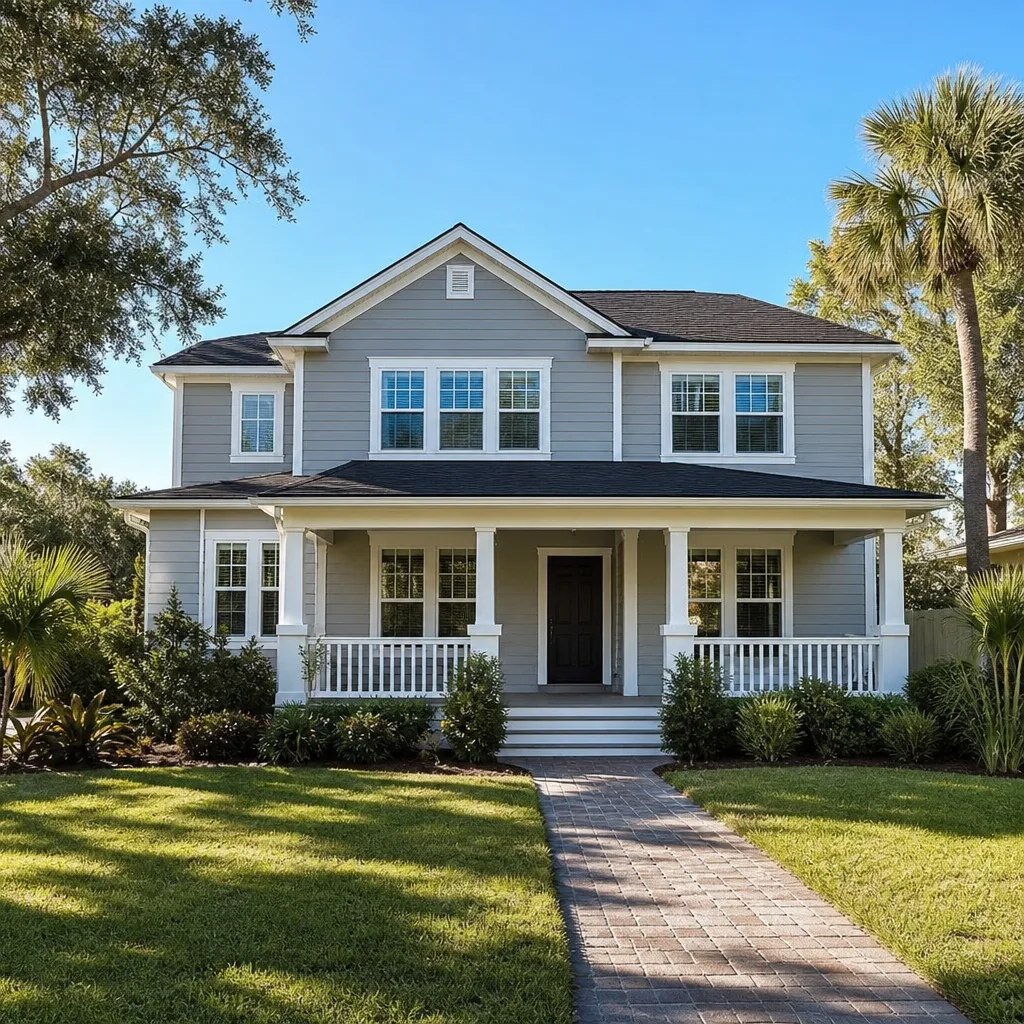
James Hardie’s product families break down by climate zone, and the gotcha in San Diego is real: HardiePlank lap siding and HardiePanel vertical siding both ship in HZ5 and HZ10 variants, and you have to specify HZ10. The HZ5 product is engineered for freeze-thaw cycles and lower humidity; it’s the wrong board on a coastal Southern California wall. The HZ10 boards have a different moisture-management profile and a slightly different density, which is why you cannot mix the two mid-wall without creating a visible seam and a warranty void. We also work with HardieTrim boards (the 5/4 boards used at corners and around windows) and HardieSoffit panels. The product label on the back of every board carries the series code, the profile number, and the manufacture date. If you cannot find the label, measure the board thickness: HardiePlank lap siding runs .312″ in the standard 7.25″ exposure, while HardieTrim runs a full .75″. The OEM-vs-aftermarket question is simpler with Hardie than most brands because the boards are the thing; there is no worthwhile aftermarket equivalent. We stock genuine Hardie boards, fasteners, and flashing on the truck for addition and ADU work. For the record, Penhallow Remodeling San Diego is an independent general contractor; we are not affiliated with James Hardie, but we’ve been installing their product lines on San Diego additions for years.
Styles & brands we work with







Signs Your James Hardie Home Additions & ADU Is Failing
- Boards cracking at outside corners. This is almost always a fastener problem. Hardie requires blind nailing at corner trim or a specific face-nailing pattern, and when someone face-nails too close to the edge, the board’s expansion in San Diego heat does the rest. The crack starts as a hairline and opens up within two seasons.
- Swelling or flaking at the bottom course. The bottom edge of any lap siding course needs clearance above grade, and Hardie specs a minimum 6″ between the lowest board and soil in most of San Diego. When a patio or a raised garden bed eats that clearance, wicking starts and the bottom course fails.
- Paint failure in under three years, especially on south-facing walls. Hardie doesn’t fail this way on its own. What fails is the install: caulk in the joints instead of a proper flashing or joint treatment, or a painter who skipped the alkaline primer. San Diego’s UV exposure punishes that schedule hard.
- Gaps opening at trim joints around windows and doors. HardieTrim moves with temperature and moisture. If the trim was installed without a proper gap and flashing behind the joint, you’ll see the caulk crack and the board ends spread. Water gets in behind the wall exactly there.
- Soft spots appearing on HardiePanel vertical siding in shaded areas. This is a moisture-retention failure that usually traces back to missing housewrap or taped seams done wrong behind the panel. The panel itself is moisture-resistant, not moisture-proof, and trapped water behind it will find the seams.
See the difference
 Before
 After
After Before
 After
After Before
 After
AfterReplacement Cost & What’s Included

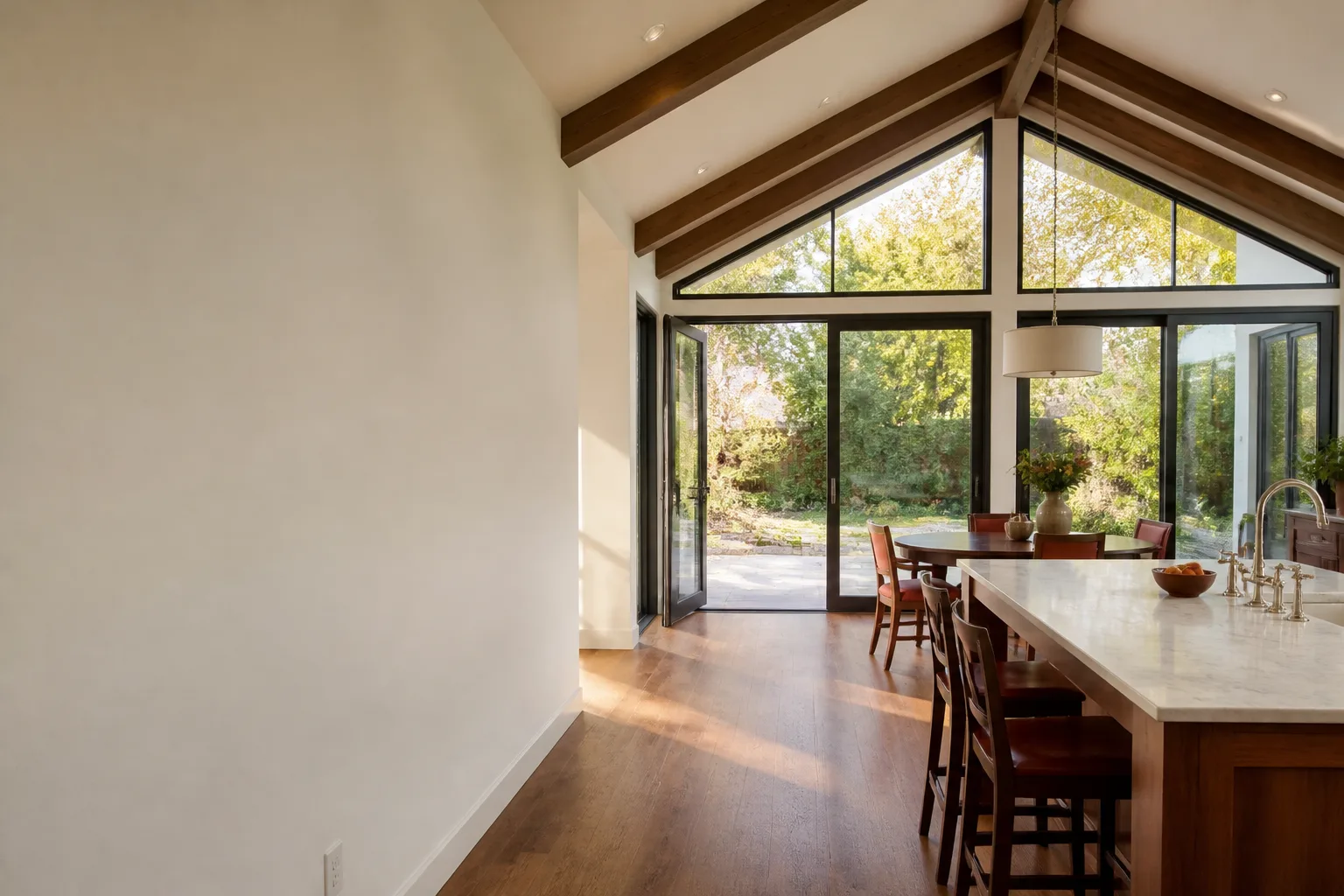
For a full home addition or ADU in San Diego with James Hardie siding and trim, the all-in range is $53,100 – $153,400. On the lower end of that range, you’re typically looking at a single-story bump-out with a simple roofline, slab-on-grade, and standard lap siding coverage. The higher end buys a detached ADU with a full kitchen and bath, upgraded foundation conditions (San Diego’s hillside lots and expansive soil zones add real money), and extra HardiePanel with battens or premium trim detailing.
For siding-only replacement on an existing wall where the Hardie is failing, you’re usually $4.50 – $11.00 per square foot installed depending on whether we’re yanking off damaged courses and reusing framing or pulling the entire elevation and re-flashing everything. That includes the boards, fasteners, flashing, joint treatment, disposal, and our written price up front. We bring the written number to you before work starts, and the 365-Day Done Right Promise covers the install in writing. If something we did fails inside a year, we come back and fix it. No re-inspection fee, no argument.
DIY or Call Us?
Homeowners can safely do one thing with James Hardie: look. Walk the walls after a heavy rain and check for gaps at trim joints, missing caulk, and bottom-course clearance. You can photograph what you see and send it to us. What you should not do is pull a damaged board off a wall yourself. Hardie is heavy, the fasteners are buried or hidden, and prying a board free without knowing how it was nailed often breaks the course above it. The bigger risk is what you’ll find behind the board: a failed flashing detail or missing housewrap that needs to be corrected before new board goes up. If in doubt, call us at (619) 604-9624 and describe what you’re seeing. We’ll tell you whether it’s a real issue or just a cosmetic one.
FAQs
James Hardie siding carries a 30-year non-prorated warranty and realistically lasts 40 – 50 years in San Diego’s climate when installed to spec and painted on schedule. Failure before year 15 is almost always an install defect, not a product defect. If yours is failing early, call (619) 604-9624 and we’ll help you figure out why.
Small cracks can sometimes be caulked and painted, but any board with swelling at the bottom edge, a corner crack that opens wider than a dime, or water staining behind the paint should be replaced, not patched. Patching buys you a season; replacement buys you a decade.
Replacing a single damaged course on a standard San Diego home addition usually takes half a day including flashing and touch-up. A full re-side of an average ADU (500 – 800 square feet of wall area) is typically three to five working days. We give you a defined arrival window and a written schedule before we pull the first board.
We keep standard HZ10 lap boards, 5/4 HardieTrim, soffit panels, flashing, fasteners, and joint treatment stocked for service calls and addition work throughout San Diego. Specialty profiles or non-standard colors can ride along on our next supplier run, so you’re not waiting on a backorder we could have predicted. Call (619) 604-9624 and we’ll check stock while you’re on the phone.
Written by Trevor Nash, Owner, Penhallow Remodeling San Diego at Penhallow Remodeling San Diego, serving San Diego and nearby areas.


